15 Years Professional manufacturer focusing on R&D, production and sales of aerosol product.
 +86 15858960959
 [email protected]
15 Years Professional manufacturer focusing on R&D, production and sales of aerosol product.
+86 15858960959[email protected]Achieving a consistent, attractive finish with a Tire Shine Aerosol is straightforward, yet the difference between a satisfactory result and an exceptional one often lies in the preparation and technique. Simply spraying the product on and leaving it can lead to uneven coverage, splattering onto the vehicle's body, or a disappointingly short-lived effect. By following a structured approach, these common issues can be avoided, and the application process becomes efficient and reliable.
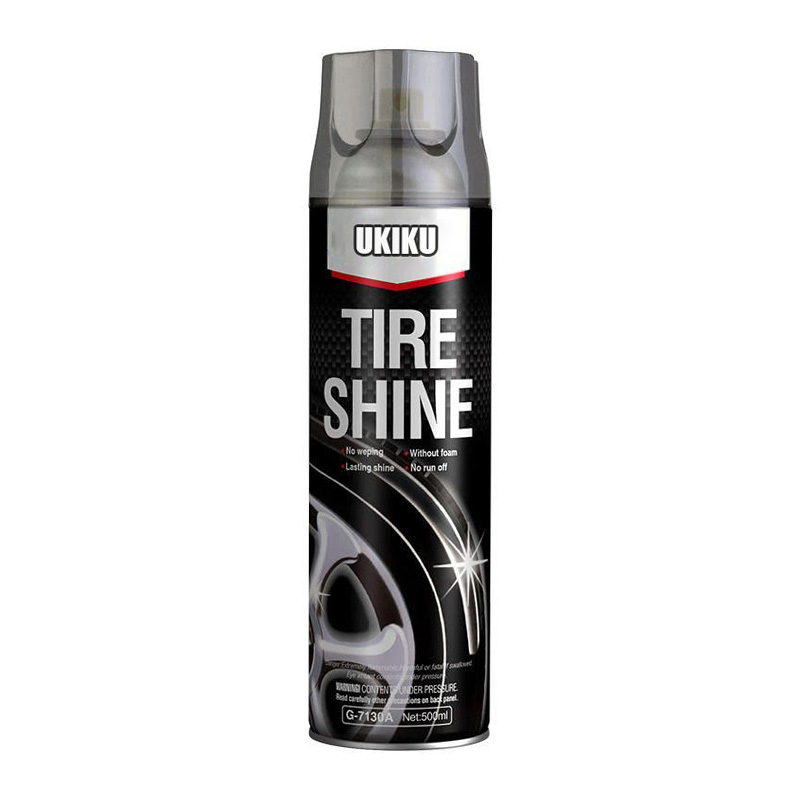
The single most important phase happens before the aerosol can is ever shaken. The tire must be impeccably clean. Any existing dressing, along with road film, brake dust, and grime, must be removed. Using a dedicated tire cleaner or an all-purpose cleaner with moderate alkalinity is advised. Agitation with a stiff-bristled brush is crucial to lift embedded contaminants from the textured sidewall. A thoroughly clean surface ensures the new dressing can adhere properly, leading to more uniform coverage and longer-lasting results. After cleaning, the tire should be rinsed completely and allowed to dry fully. A cool, dry tire in a shaded area is the ideal canvas.
With a clean, dry tire, the application can begin. For those concerned about overspray on alloy wheels or brake components, using a small piece of cardboard as a shield is a simple and effective method. Shake the Tire Shine Aerosol can as directed.
Hold the can approximately 15-20 centimeters from the tire sidewall. The goal is to apply a thin, even mist. Begin spraying in a steady, sweeping motion, starting slightly before the tire and continuing slightly past it to maintain consistency. It is advisable to work on one-quarter or one-half of the tire at a time to manage the process. A common and highly effective practice is to spray the product directly onto a foam applicator pad or a clean microfiber towel. This "spray-and-wipe" method grants complete control over the amount of product used and its placement. It is arguably the most reliable way to guarantee an even coat and is the primary technique for preventing "sling," where excess product is thrown onto the car's paint during driving.
If the product is applied with a towel or pad, buff the sidewall lightly to spread the dressing evenly into all the grooves and lettering, removing any excess that could run or sling. If the product is sprayed directly on the tire, a final pass with a dry microfiber cloth to level the coating is still beneficial. After application, allow the dressing to set. A drying time of 15 to 20 minutes is typical for the surface to become tack-free. For a more complete cure, allowing an hour before driving is often suggested, especially for products designed to form a durable layer. This curing time is essential for the polymers in the dressing to properly set, enhancing their resistance to water and wear.
Several missteps can compromise the result. Applying dressing to a wet tire will dilute the product and prevent adhesion. Using too much product in a single coat is a frequent cause of runs, an uneven glossy appearance, and sling. Applying dressing in direct sunlight or to a hot tire can cause the product to dry too quickly, leading to streaking and making it difficult to spread evenly. Neglecting the cleaning step ensures the new dressing will bond to dirt instead of rubber, resulting in a patchy finish that quickly washes away.
Aerosol Spray Manufacturer




 ENG
ENG  English
 中文简体
中文简体 عربى
عربى Español
 русский